Free Installation Video Guide
Check out our Youtube video on how to install self-adhesive window film

Privacy window film generally falls into two categories: daytime privacy film and 24-hour privacy film. Daytime privacy film relies on a difference in lighting to reduce visibility from the brighter side of the glass. Twenty-four-hour privacy film uses an opaque, frosted, or decorative finish to obscure the view during both day and night.
The right choice depends on whether you need to maintain an outward view, how much natural light you want, and whether privacy is required after dark.
Browse all privacy window films.
Daytime privacy film typically uses tint, reflectivity, or both to make the brighter side of the glass more difficult to see through. During the day, sunlight makes the exterior side brighter than the interior, which can create a darker or mirror-like appearance from outside.
From inside, occupants can often retain an outward view because the interior is darker than the exterior. The amount of privacy and visibility varies based on the film’s shade, reflectivity, weather, window orientation, and surrounding light.
Browse daytime privacy window films.
Reflective daytime privacy film does not provide reliable one-way privacy at night when interior lights are on. After sunset, the lighting relationship often reverses: the interior becomes brighter than the exterior, making it easier to see inside.
Curtains, blinds, shades, or a separate nighttime covering are recommended when privacy is required after dark. No clear or reflective film can provide an unrestricted view from inside while permanently preventing visibility from outside under every lighting condition.
Browse one-way mirror and daytime privacy options.
Twenty-four-hour privacy film does not depend on which side of the glass is brighter. Instead, it uses an opaque, frosted, patterned, or blackout finish to obscure or block the view through the glass.
These films can provide privacy during both day and night, but they also reduce or eliminate a clear outward view. The level of natural light depends on the selected finish.
Browse 24-hour opaque privacy films.
Frosted and matte films blur shapes and details while allowing diffused light to pass through. They are commonly used on bathroom windows, glass doors, office partitions, and other areas where privacy and natural light are both important.
Browse frosted and matte window films.
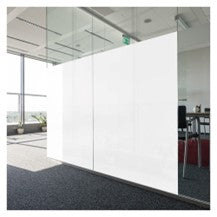
Blackout and whiteout films provide opaque coverage and block the view through the glass. Blackout film creates a dark appearance, while whiteout film provides a lighter finish. Both options reduce the amount of visible light passing through the covered area.
Browse blackout and whiteout window films.
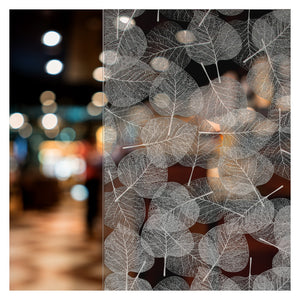
Decorative opaque films combine privacy with patterns, colors, or textures. They can be used when the glass should serve as a design feature in addition to obscuring visibility.
Consider how the lighting changes from day to night. Reflective privacy depends heavily on which side of the glass is brighter, while opaque and frosted finishes provide more consistent privacy.
If maintaining a view is important, daytime privacy film may be the better choice. If privacy is more important than visibility, choose a frosted, patterned, or opaque film.
Dark and blackout films reduce more visible light. Frosted films can preserve diffused daylight, while lighter reflective films may maintain more brightness than very dark options.
Confirm that the selected film is suitable for the window’s glass type. Dual-pane and Low-E windows may require specific products or additional compatibility review.
Use the film only in the installation location specified for the product. Films designed solely for interior application may not be suitable for outdoor exposure.
Frosted, opaque, blackout, whiteout, and certain decorative films can provide privacy during both day and night because they do not depend on exterior lighting. The tradeoff is reduced or eliminated visibility through the glass.
Many daytime privacy films preserve some outward visibility when the exterior is brighter than the interior. Visibility varies based on shade, reflectivity, and lighting conditions.
Yes. When the interior is brighter than the exterior, reflective film may allow people outside to see into the room. Use blinds, curtains, or shades when nighttime privacy is required.
Frosted film obscures details and direct views, but silhouettes or shadows may still be visible depending on the film, distance from the glass, and lighting. Choose a more opaque film when maximum view blocking is required.
Some privacy films may be compatible with certain dual-pane configurations, but compatibility varies. Review the product guidance and window warranty before installation.
Choose daytime privacy film when preserving an outward view is important and privacy is primarily needed during daylight hours. Choose frosted, opaque, blackout, whiteout, or decorative film when privacy is required during both day and night.
Before purchasing, compare shade, reflectivity, light transmission, glass compatibility, and installation requirements. For application guidance, visit the BDF window film installation page.
{"one"=>"Select 2 or 3 items to compare", "other"=>"{{ count }} of 3 items selected"}